Picky
Can you decline Uber and Bolt offers? Acceptance rate and cancellations in 2026
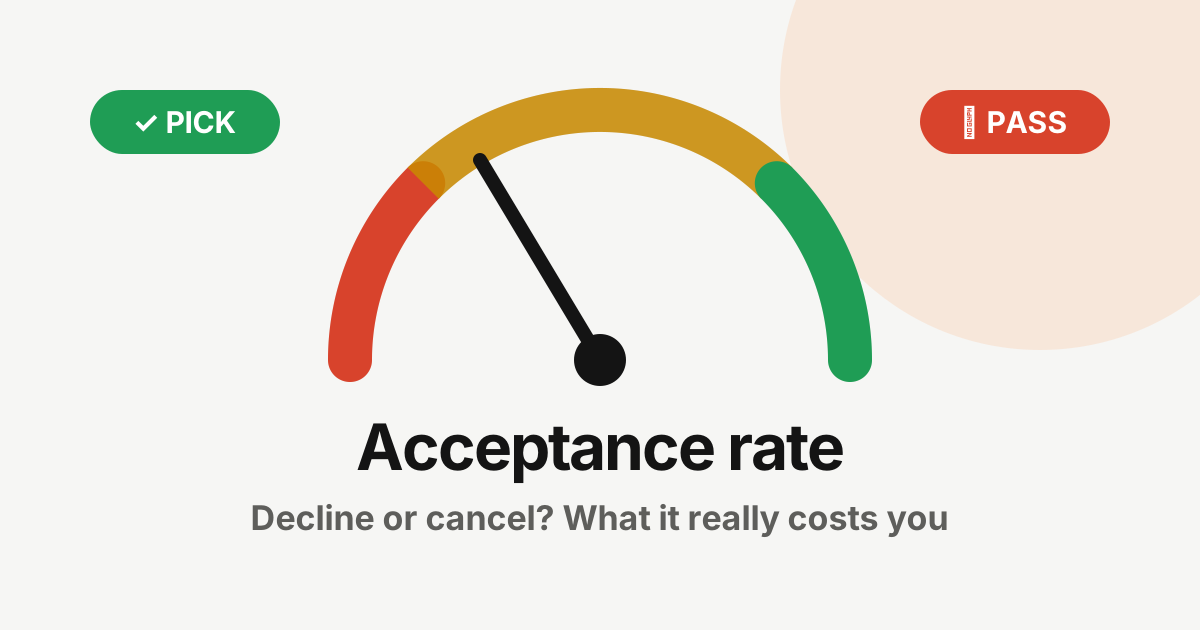
Every driver has been there: a bad offer appears and you hesitate, because you're not sure what declining will do to your account. Here's what's actually known in 2026, and the habits that keep you safe.
Declining and cancelling are different
- Declining (or letting the offer expire) happens before you accept. It counts against your acceptance rate.
- Cancelling happens after you've accepted. It counts against your cancellation rate, and it leaves a passenger waiting.
Platforms treat the second much more seriously. Uber's own deactivation policy says that low acceptance doesn't lead to permanent deactivation, but that drivers who decline far more often than others in their city may be logged out of the app for a short time. Cancellations are measured against a maximum for your city, and going over it repeatedly can get an account deactivated.
What the rules look like in practice
Rules vary by country and city, and the platforms change them often. A few points from recent sources:
- Romania: the September 2026 ETUC and Worker Info Exchange study reports that Uber suspends drivers for five days if their acceptance rate falls below 25%.
- Across Europe: the same study found many drivers now accept as few as 15% of requests, because so many are below what's worth driving for, while ten years ago anything under 80–85% could put an account at risk.
- Bolt: shows your acceptance rate in the driver app. Check the rules for your city there, since they differ by market.
Because the details change, the reliable source is the rate screen and help pages inside your own driver app. Check them once a month.
The habits that protect your account
- Decide before you tap. The safest way to turn down a bad trip is to not accept it. Accepting and then cancelling hurts more.
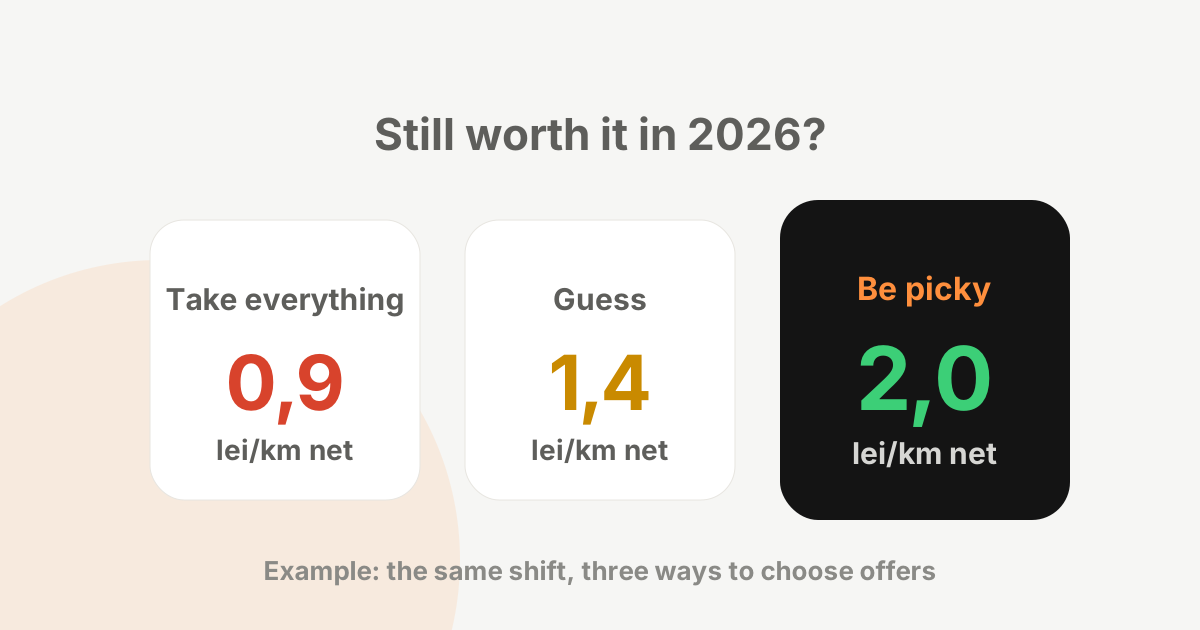
- Know your number in advance. If you know your minimum net per km and per hour, you don't need to think. A clear rule also makes you faster than the countdown.
- Watch your rate, not every trip. If your city has an acceptance threshold, keep a margin above it. At quiet times, a "maybe" trip can be worth taking to protect the rate.
- Cancel only for real reasons, like a no-show or safety concern, and use the right reason in the app.
Is it safe to use an offer checker?
Apps that tap or accept for you can break platform rules. A checker that only reads what's already on your screen and tells you its verdict is a different thing: you still accept or decline yourself, exactly as before. Picky works that way. It reads the offer on your iPhone, never connects to Uber or Bolt, and never touches the driver app.
In short
- Declining a bad offer is normal. Cancelling after accepting is what platforms punish.
- Some markets have acceptance thresholds, like the 25% reported in Romania. Know yours.
- A clear minimum per km and per hour makes the decision quick and consistent.