Picky
Uber's dynamic pay in 2026: why the same kilometre pays differently
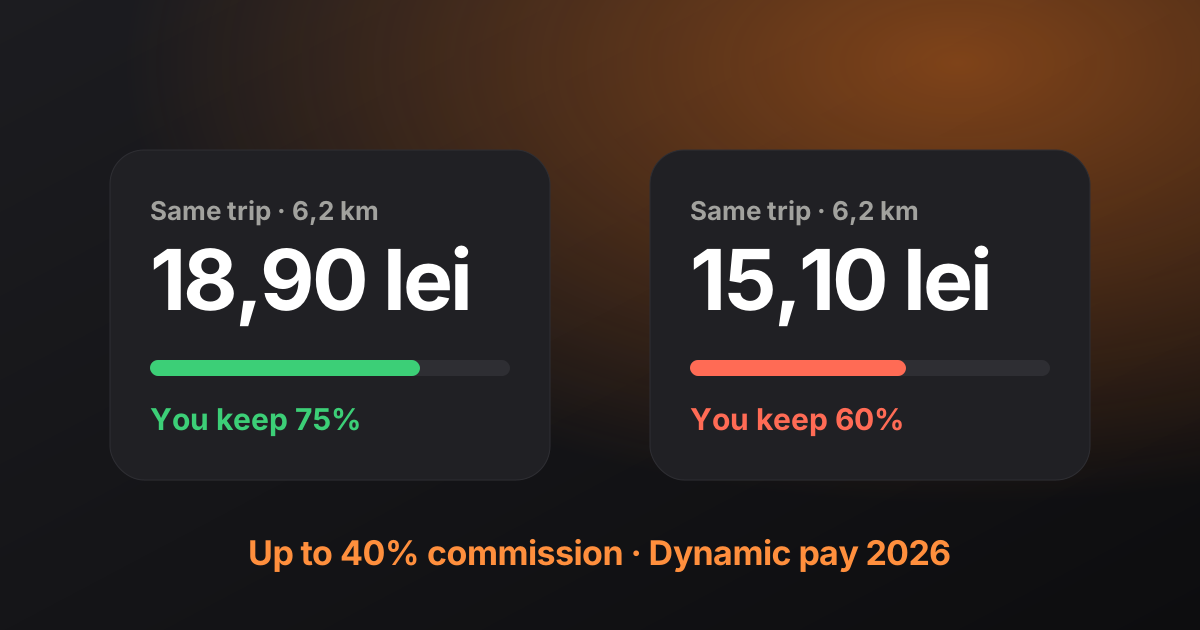
Two trips of the same length, at the same time of day, can now pay you very different amounts. That isn't your imagination. In September 2026, the European Trade Union Confederation (ETUC) and Worker Info Exchange published the first Europe-wide study of Uber's "dynamic pay", and it explains why.
What the study looked at
The report covers ten countries: Belgium, Denmark, France, Germany, Ireland, the Netherlands, Poland, Portugal, Romania and Spain. The researchers combined drivers' own earnings records, ride-alongs, price tests on the customer side and the trip data drivers requested from Uber under the GDPR.
Their main conclusion: dynamic fares are now the norm in every country studied. The price the customer pays and the share Uber keeps are both set by an algorithm, and both change from trip to trip.
Commission is no longer a fixed 25%
For years, most European drivers knew the deal: Uber kept around 25% and you kept the rest. According to the study, that fixed rate is gone in six of the ten countries. The highest commissions observed on single trips were:
- up to 45%, the highest rate seen in the study;
- up to 40% in Romania, where dynamic pay started in August 2024. Uber promised an average of 25%; one driver's weekly data showed 28%, and drivers report trips above 30%;
- up to 34% in Belgium, where one driver's average monthly commission rose from 25% in September 2024 to 30.6% in January 2026.
Uber has said that its take rate varies week to week but has stayed stable over time. The researchers disagree, and in most countries drivers can't check either way at the moment of accepting: the study found that Uber doesn't show the take rate on the offer card in any of the countries where it was assessed.
Why this matters when an offer appears
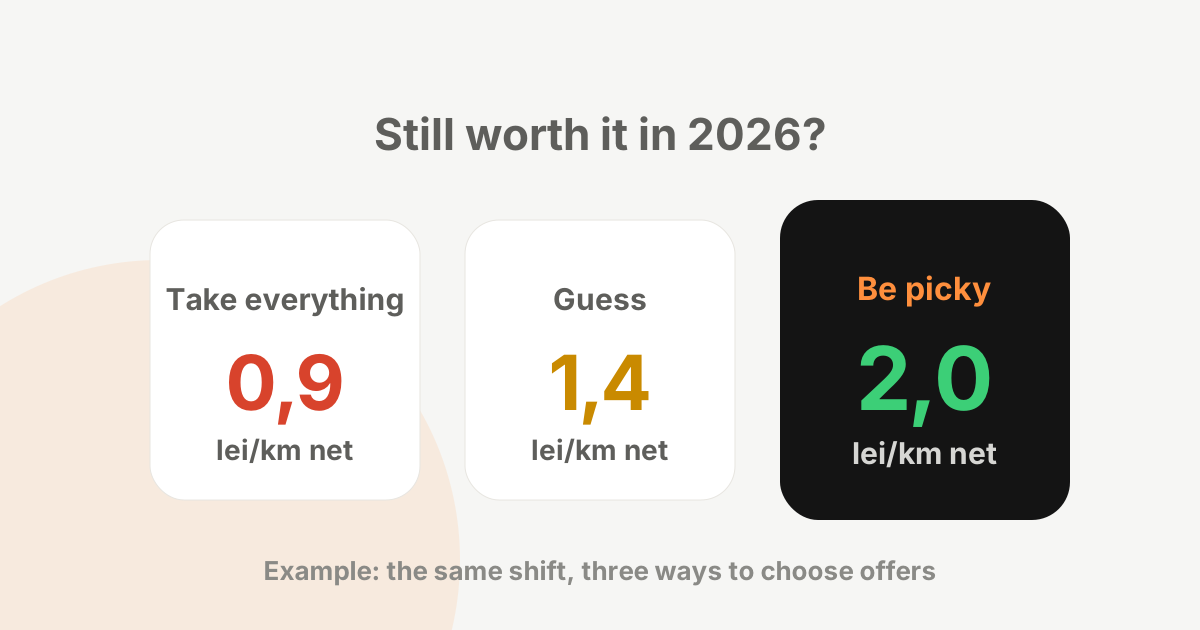
When pay followed a fixed rate per kilometre and per minute, experience was enough: after a few weeks you knew roughly what a trip to the airport was worth. With dynamic pay, the report notes, the work of judging each offer has moved onto the driver. In a few seconds you have to weigh the price, the pickup distance, the trip length, your costs and the chance of a good next trip.
The authors also point out how acceptance has changed. Ten years ago, drivers who accepted less than 80–85% of requests could risk losing their account. Today, many drivers they spoke to accept as few as 15%, because so many offers are below what they consider worth driving for.
The one number that still works: what you keep per km and per hour
You can't control the commission, but you can judge every offer by what it leaves you. Two numbers do that:
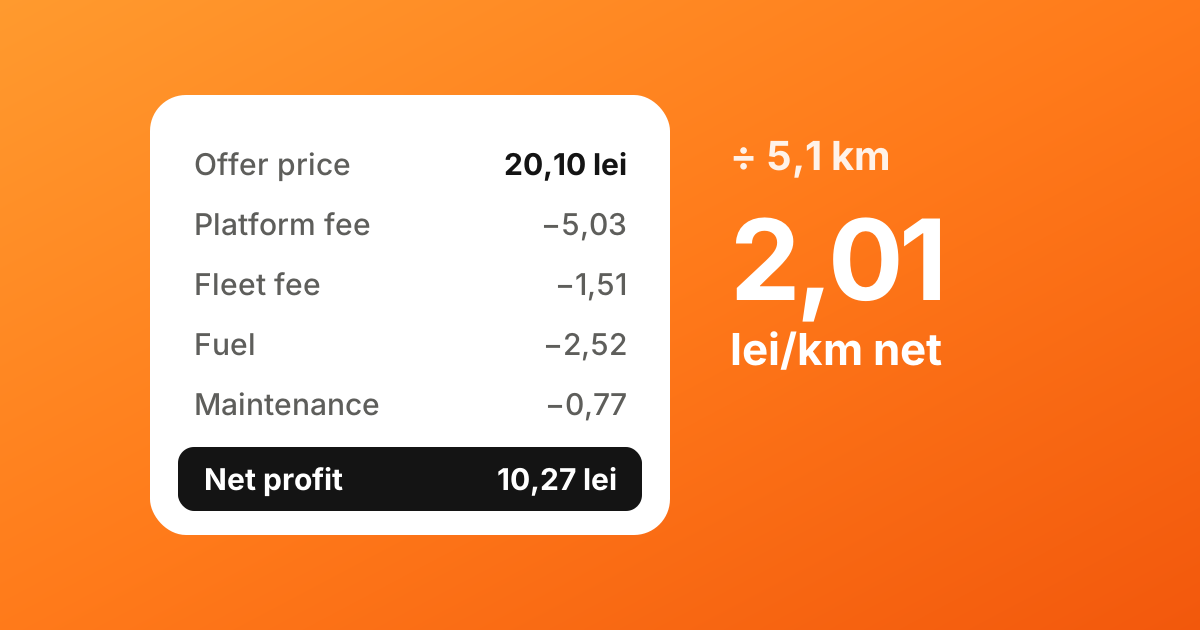
- Net per kilometre: what you keep after the platform's cut, your fleet's fee, fuel and wear, divided by all the kilometres, pickup included.
- Net per hour: the same amount, divided by the total time, pickup included.
Set your own minimums for both, based on your real costs, and treat everything else as noise. A long trip with a big price can still pay less per kilometre than a short one. We explain the calculation step by step in How to calculate your real profit per km.
What drivers can do now
- Know your floor. Work out the net per km and per hour below which a trip isn't worth it for you, and stick to it.
- Count the pickup. Pickup kilometres are part of the trip for your car and your fuel, even if they aren't in the fare. See Long pickups: how far is too far?
- Request your data. Under the GDPR you can ask any platform for the data it holds about you, including trip records. That's how the researchers measured commissions.
- Watch the new EU rules. The Platform Work Directive has to be in national law by 2 December 2026 and includes new rights about algorithmic decisions. See what changes for drivers.