Picky
Electric or petrol for Uber and Bolt in 2026: which costs less per km?
Electric cars are no longer rare on Uber and Bolt. In the first quarter of 2026, zero-emission vehicles did 17.9% of all Uber's on-trip kilometres in Europe, and over 40% in cities like Amsterdam and London. If you're choosing your next car, here's how to tell whether electric would actually cost you less.
Why the platforms want you electric
Uber has said it aims to be a fully electric platform in Europe by 2030, and both Uber and Bolt have run programmes with charging discounts, partner rental fleets or purchase support in some cities. These offers change often and vary by city, so check what's available where you drive before counting on any of them.
The wider market is moving too: battery-electric cars took around 20% of new car registrations in Europe in early 2026, and more affordable models are arriving.
The cost per km, honestly
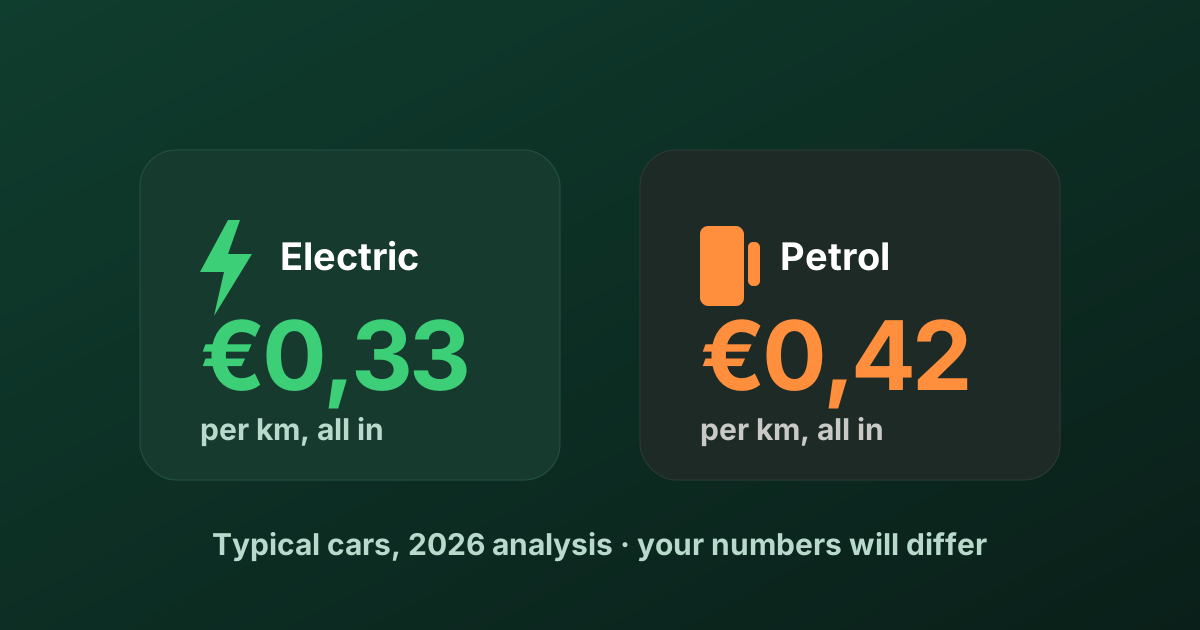
For ride-hailing, the number that matters is what each kilometre costs you, all in. A 2026 Irish analysis of typical cars gives a useful comparison:
"All-in" includes depreciation, insurance, tax and maintenance, at around 15,000 km a year. Ride-hailing drivers often do two or three times that, which lowers the fixed costs per km and makes the cheaper running costs of an EV count for more.
Where an EV saves you money
- Energy. Charging at home or at a cheap overnight rate usually costs far less per km than petrol or diesel.
- Maintenance. No oil changes, fewer moving parts and much less brake wear thanks to regenerative braking.
- City driving. Stop-and-go traffic, where combustion engines are least efficient, is where EVs are at their best.
Where it doesn't
- Fast charging. If you can't charge at home and rely on public fast chargers, the energy saving can shrink a lot. Bolt's own driver survey named the price and availability of fast charging as one of the main obstacles.
- Charging time. Time spent charging during a shift is time you're not earning. Plan charging for quiet hours.
- Purchase price and depreciation. These make up a bigger share of an EV's costs, so the deal you get on the car matters a lot.
How to compare for yourself
- Work out your energy cost per km for each option: price per litre × litres per km, or price per kWh × kWh per km, using the price you'd really pay.
- Add maintenance per km and the car's cost (rent, lease or depreciation) divided by the kilometres you drive in a year.
- Compare the totals at your yearly mileage, not a private driver's.
Then use that number as your cost per km when you judge offers. A cheaper car to run means more trips clear your line, which is the real way an EV pays you back.