Picky
Is driving for Uber and Bolt still worth it in 2026?
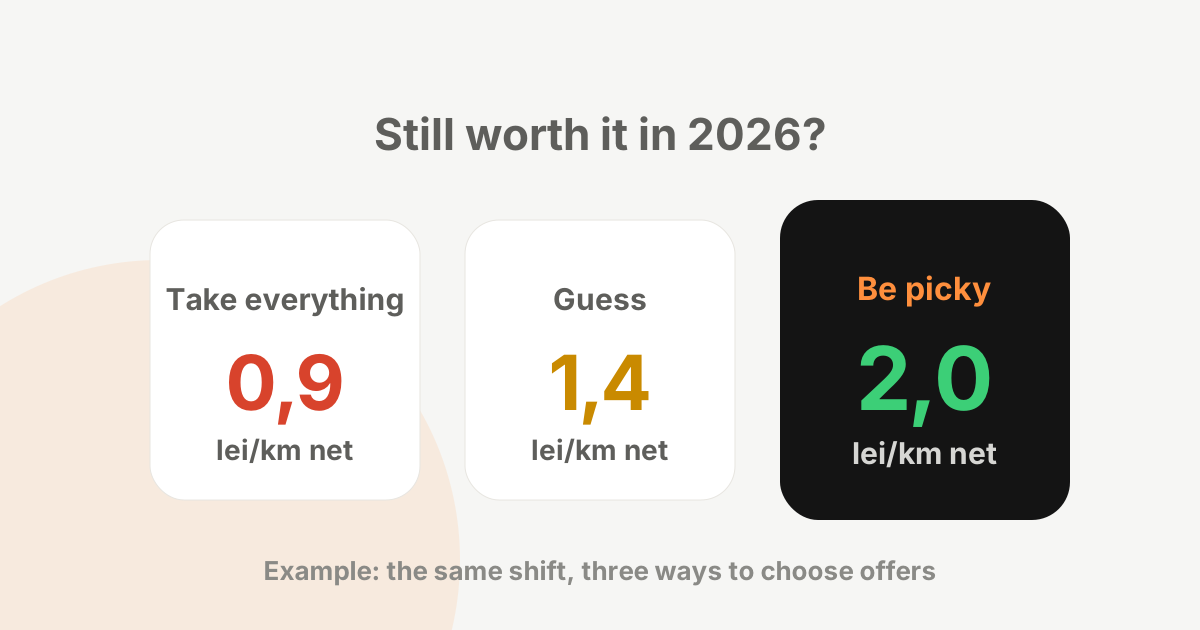
It's the question every new driver asks, and plenty of experienced ones too. The honest answer in 2026: it can be, but far less automatically than a few years ago. What you earn now depends much more on which offers you take than on how many hours you drive.
What's changed
Three things have made the job harder to get right, according to the September 2026 study by the ETUC and Worker Info Exchange across ten European countries:
- More drivers on the road. Government data from Poland, Portugal, Romania and France shows driver numbers have grown substantially. Romania alone has around 66,000 licensed private hire vehicles, with no cap. More drivers means more waiting between trips, and waiting isn't paid.
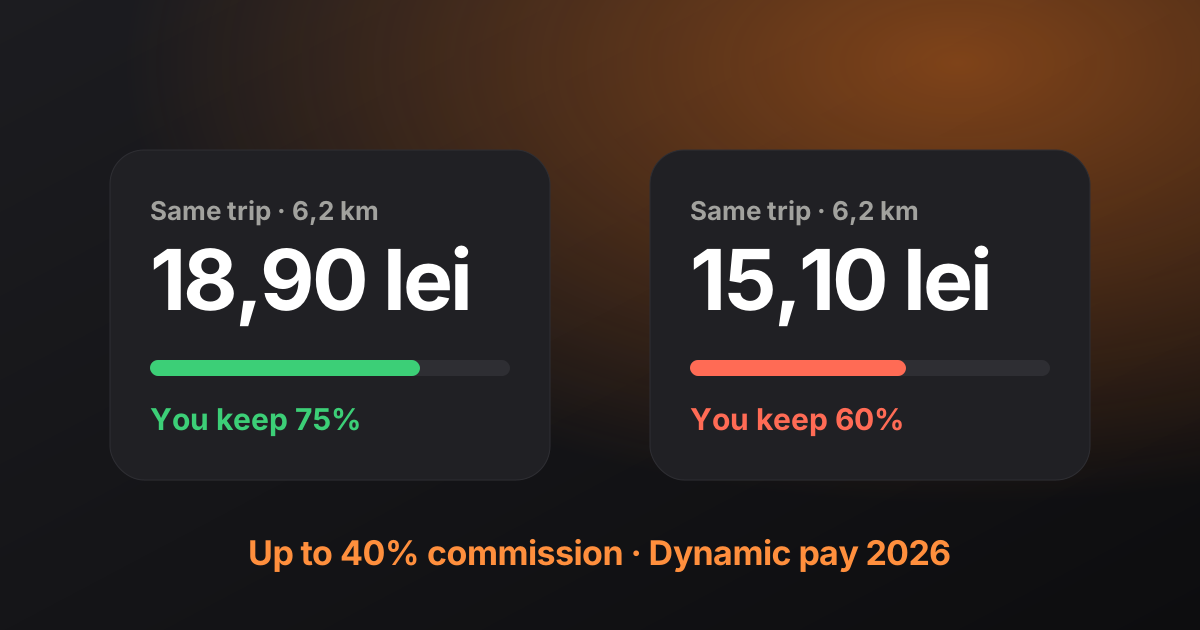
- Commission that changes from trip to trip. The old fixed 25% has given way to dynamic commission, reaching up to 40% in Romania and 45% at the highest observed (more in dynamic pay in 2026).
- Costs that sit with the driver. Fuel, insurance, maintenance, the car itself, and in several countries VAT on the platform's commission, all come out of pay before it reaches you.
What drivers report earning
Figures vary hugely with city, hours, car and how you work. As a rough guide, Romanian driver guides published in 2026 put a full-time driver in Bucharest at roughly 4,000–6,500 lei net a month after commission, fuel and maintenance. Treat any number like that with care: many of these guides come from fleet partners recruiting drivers, and two drivers in the same city can earn very different amounts.
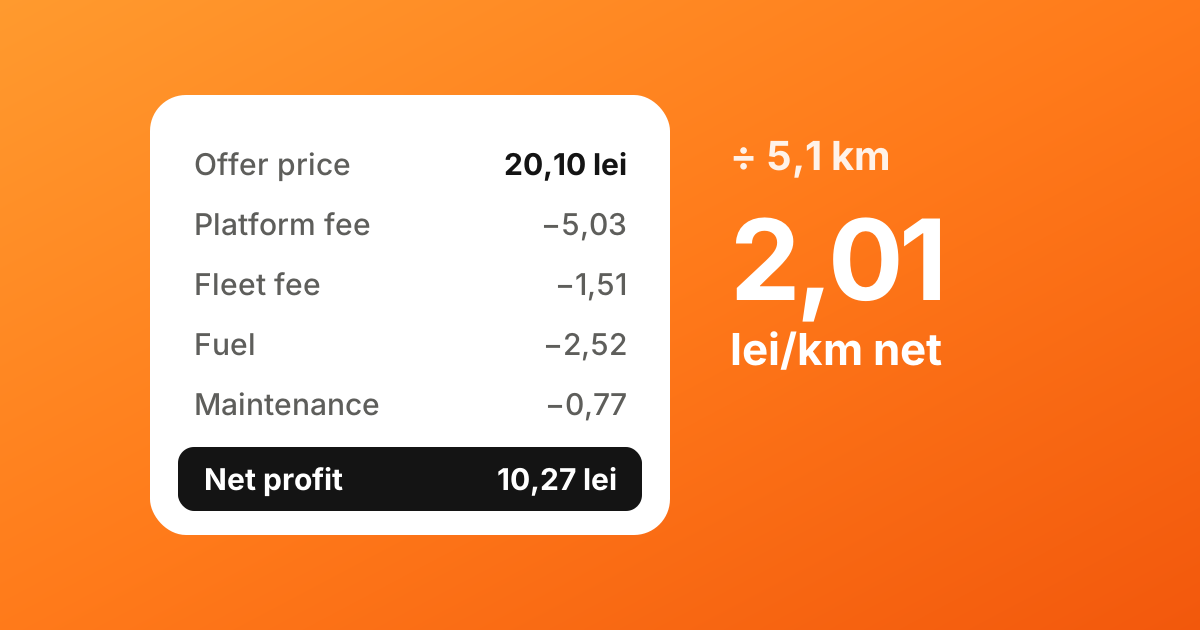
The more useful question isn't "what does the average driver make" but "what do my trips leave me per km and per hour?"
Where the money leaks
- Accepting everything. A trip that pays below your costs per km loses money, however full your day feels.
- Long pickups. Kilometres to the passenger cost the same as paid ones (see long pickups).
- Not knowing your costs. If you don't know what a kilometre costs you, you can't tell a good offer from a bad one.
- Empty kilometres home. A late trip far out of town can cost you the drive back.
What the drivers who make it work do differently
- They know their numbers. Their minimum net per km and per hour, worked out from real costs (here's how).
- They're picky. They decline offers below their line without guilt, and keep their acceptance rate above whatever threshold their market has (more on that).
- They work the right hours. They track which hours and areas pay best for them, and drive those instead of just more hours.
- They run more than one app where that's allowed, so a quiet moment on one isn't dead time.
- They review the week. What they earned, what they skipped, and what it paid.
So, is it worth it?
If you drive whatever comes, in a crowded market, with dynamic commission, it's increasingly hard to make the numbers work. If you treat each offer as a business decision, know your costs and only take trips that clear your line, ride-hailing can still be a flexible way to earn in 2026. The difference is less about the app and more about the choices you make in the few seconds after an offer appears.